Plastic pollution: some lakes are worse impacted than oceans

Publicly released:
Australia; New Zealand; QLD; SA
Photo: Herman Darnel Ibrahim. This file is licensed under the Creative Commons Attribution-Share Alike 3.0 Unported license

For the first time, plastics and microplastics have been assessed in lakes across the world, in a new study published in Nature. The study shows that plastic fragments and fibres from washing clothes and packaging residues in freshwater lakes and reservoirs are higher than those in plastic islands in the ocean – the so-called plastic ‘Garbage patches’.

Media release

From: Griffith University

For the first time, plastics and microplastics have been assessed in lakes across the world, in a new study published in Nature.

The study shows that plastic fragments and fibres from washing clothes and packaging residues in freshwater lakes and reservoirs are higher than those in plastic islands in the ocean – the so-called plastic ‘Garbage patches’.

“Plastics and microplastics affect lakes and reservoirs on a global scale, including the most remote lakes”, said co-author Professor David Hamilton, Director of Griffith University’s Australian Rivers Institute.

“In addition to negatively impacting drinking water, plastics pollution has harmful effects on aquatic organisms and ecosystem function. Plastics don’t break down, they mostly break up into smaller and smaller particles, with increasing potential to be absorbed by living organisms, including humans.”

The research was coordinated through the Global Lake Ecological Observatory Network (GLEON), an international consortium of researchers known for investigating global scale processes and phenomena occurring in freshwater environments, of which Professor Hamilton was one of the founding members.

The research used plankton nets to sample the plastic debris in 38 lakes located in 23 different countries. The samples were analysed at the University of Milan-Bicocca, using Raman micro-spectroscopy to accurately determine the polymeric composition of microplastics.

Lakes with the highest contamination of plastic debris are some of the main sources of drinking water for local populations, and included Lakes Maggiore (Italy), Lugano (Switzerland/Italy), Tahoe (US) and Neagh (UK). Lakes in Australia showed moderate levels of plastics contamination.

“Lakes act as ‘pollution sentinels’, because they integrate and accumulate microplastics arising from the atmosphere and land,” said Professor Hamilton

“Plastics that accumulate on the surface of aquatic systems can promote the release of methane and other greenhouse gases,” explains Veronica Nava, a research fellow at the University of Milan-Bicocca’s Department of Earth and Environmental Sciences, under the supervision of Professor Barbara Leoni, coordinator of the Inland Water Ecology and Management research group.

“Plastics can reach beyond the hydrosphere and interact with the atmosphere, biosphere and lithosphere, potentially affecting biogeochemical cycles.”

“Additionally, these environments can retain, modify, and transport plastic debris across watersheds to the oceans,” Ms Nava concludes.

“These results demonstrate the global scale of plastic pollution. No lake, not even those furthest from anthropogenic activity, can be considered truly pristine. This should prompt us to review pollution reduction strategies and waste management processes.”

Multimedia
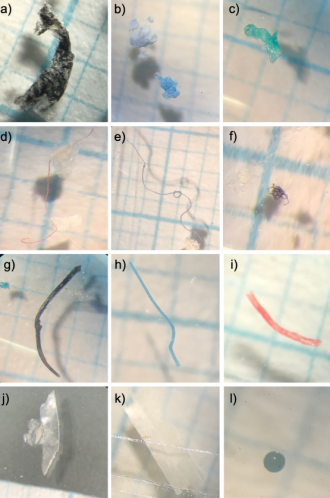
Images of different shapes of plastic particles collected in water samples
Journal/
conference:
Nature
Research:Paper
Organisation/s: The University of Adelaide, Griffith University, National Institute of Water and Atmospheric Research (NIWA), University of Waikato, Horizons Regional Council
Funder: A.M.A.-G. acknowledges the Foundation for Science and Technology (FCT, Portugal) for financial support through national funds FCT/MCTES (PIDDAC) to CIMO (UIDB/00690/2020 and UIDP/00690/2020) and SusTEC (LA/P/0007/2020). R. Bao acknowledges support from Project IMPACOM (PID2019-107424RB-I00) of the Spanish Ministry of Science and Innovation. M.C.-A. was supported by a Ramon y Cajal contract financed by the Spanish Ministry of Science and Innovation (RYC2020-029829-I). M.C. acknowledges support from Cátedra EMALCSA-UDC (industrial chair). R.C. was supported by a Juan de la Cierva contract and Project FJC (FJC-2021-046415-I) of the Spanish Ministry of Science and Innovation financed by the Next Generation EU. Z.E. and M.G.M. acknowledge support from the Portuguese Science and Technology Foundation (FCT) project no. PTDC/CTA-AMB/30793/2017 (AdaptAlentejo— Predicting ecosystem-level responses to climate change). H.F. acknowledges support from the Natural Environment Research Council award number NE/R016429/1 as part of the UK-SCaPE programme delivering National Capability. H.-P.G. and S.P. were supported by the European Union Horizon 2020 Research and Innovation 772 programme under grant agreement number 965367 (PlasticsFatE). D.P.H. acknowledges support from the Australian Research Council (DP190101848). S.N.M. acknowledges support from Rhodes University and the University Capacity Development Programme. K.K. acknowledges support from grant PRG 1266 of the Estonian Research Council. S.N. and S.S.S.S. acknowledge support from PAPIIT UNAM IG200820. A.P. acknowledges support from the Institute of Nature Conservation (Polish Academy of Sciences). P.R. acknowledges support from Portuguese Science Foundation (FCT) (DL57/2016/ICETA/EEC2018/25). E.-I.R. acknowledges support from grant PUT1598 of the Estonian Research Council. C.S. acknowledges support from the Flemish Interuniversity Council through the VLIR-UOS/UB Programme. G.A.W. acknowledges support from the Swedish Research Council (VR; grant no. 2020-03222) and Swedish Research Council for Environment, Agricultural Sciences and Spatial Planning (FORMAS; grant no. 2020-01091). N.W. acknowledges support from the National Natural Science Foundation of China (grant no. 52279068). F.S. acknowledges support from an IAI-CONICET special grant.
Media Contact/s
Contact details are only visible to registered journalists.